71

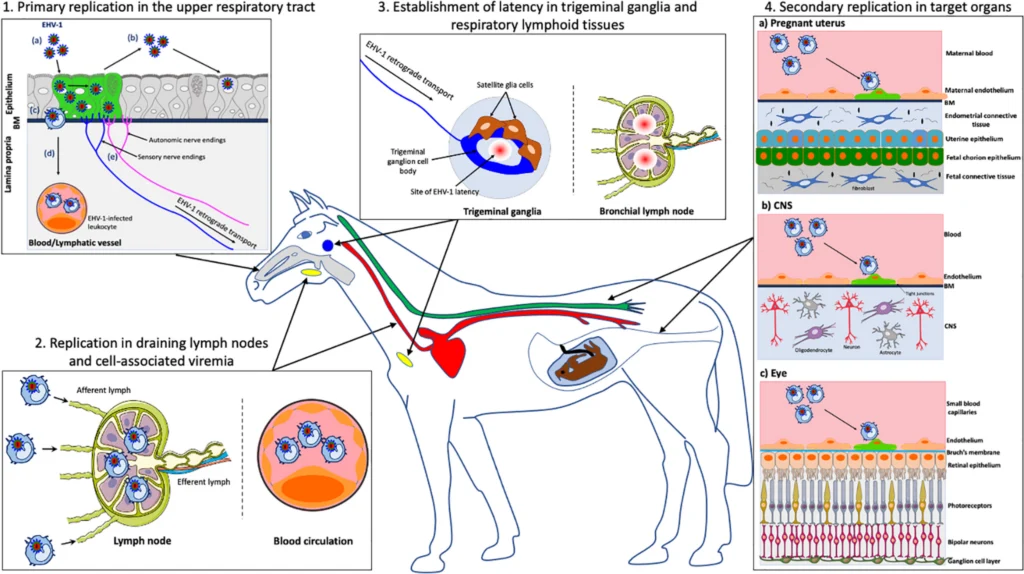
Schematic diagram showing EHV-1 equine herpesvirus type 1 infection pathogenesis and viral spread in horses
71

EHV-1 Outbreak 2025: What Horse Owners Must Do Now

A rapidly spreading EHV-1 outbreak linked to a major Texas barrel race has now affected horses in at least seven states, triggering quarantines, travel restrictions, and event cancellations. Here’s the full timeline, symptoms to watch for, and the biosecurity steps veterinarians say horse owners must take now.

Schematic diagram showing EHV-1 equine herpesvirus type 1 infection pathogenesis and viral spread in horses
71

How EHV-1 Spreads: Critical Risks Every Horse Owner Must Know

A fast-moving neurological EHV-1 outbreak linked to major Texas barrel racing events has spread across eight states, with 34 confirmed cases and multiple fatalities. This guide explains exactly how EHV-1 spreads—through air, contact, equipment, water, and people—and the protocols every horse owner must follow to stay safe.

71

How to Quarantine a New Horse

Bringing a new horse to your facility is exciting, but it also introduces the risk of transmitting infectious diseases to

Group of Nokota horses standing and resting in an open field
71

Barn Disinfection Guide

A clean, well-disinfected barn is one of the most important defenses against infectious diseases in horses. Whether you’re dealing with

71

How to Recognize Infection

Infections are among the most common health challenges horse owners face, ranging from minor skin wounds to serious systemic diseases.

71

Tetanus in Horses

Tetanus is a serious and often fatal disease in horses caused by the bacterium Clostridium tetani. This pathogen produces a

71

Strangles: What Owners Should Know

Strangles is one of the most common infectious diseases affecting horses worldwide, caused by the bacterium Streptococcus equi subspecies equi.

71

West Nile Virus

West Nile Virus (WNV) is a mosquito-borne illness that poses a significant health threat to horses across North America, particularly

Scroll to Top